Insights / Platform
A Registry Resilience Example Built for Continuity
Originally published on dns.africa
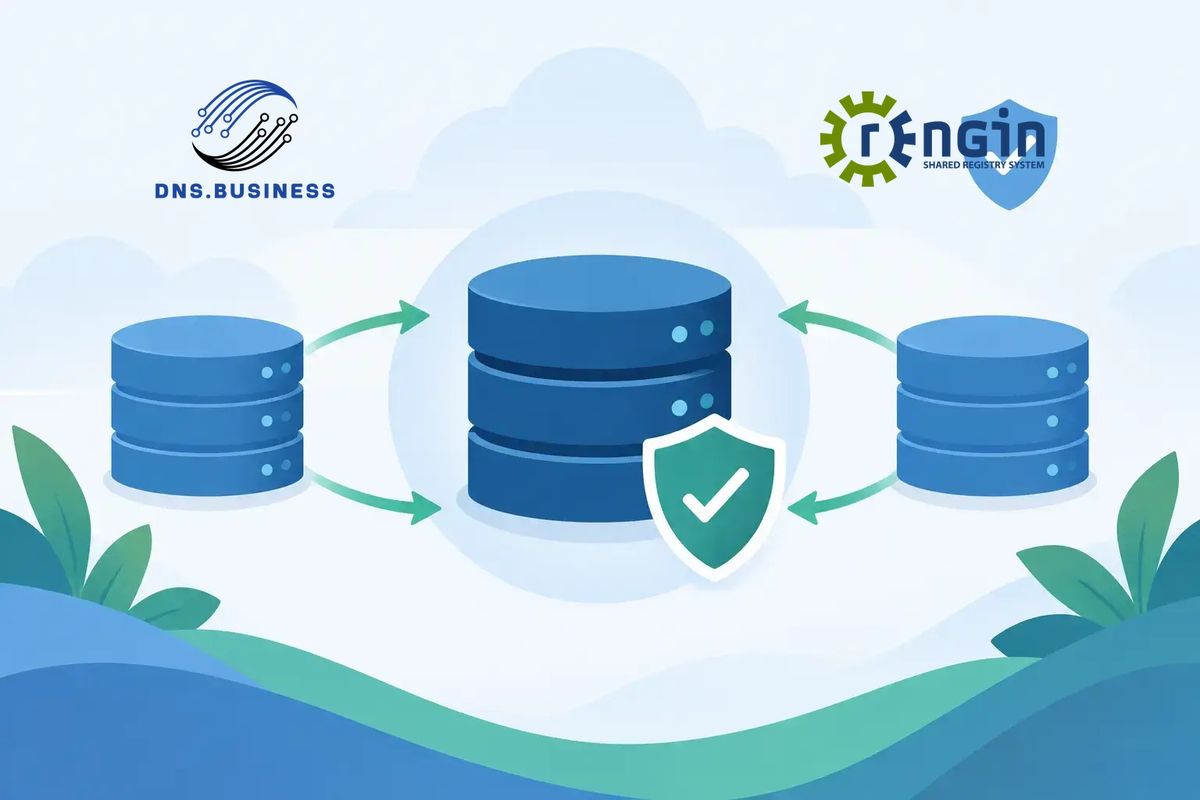
A registry does not get credit for being available only when conditions are normal. Its real test arrives when a data center fails, a network provider is impaired, a software release behaves unexpectedly, or a security incident requires immediate containment. This registry resilience example shows what continuity looks like when a domain operator must protect registrations, DNS delegation data, registrar access, and policy obligations under pressure.
Consider a regional ccTLD registry managing 850,000 domains through a network of accredited registrars. The registry operates a shared registration system, publishes zone data to its DNS infrastructure, supports EPP transactions around the clock, and must meet defined service commitments to registrars and its sponsoring authority. A major infrastructure interruption occurs at its primary hosting location during peak registration activity. The incident is not theoretical: registrar connections begin to time out, a portion of the operations team loses access to local management systems, and the registry must prevent inconsistent domain data from reaching downstream services.
Resilience is not simply the ability to switch traffic elsewhere. It is the controlled ability to continue essential services, preserve the integrity of authoritative registration data, communicate clearly, and recover without creating a second incident.
At DNS.Business, the platform built for this kind of continuity is rEngin. rEngin SRS is the core registry engine and the middle layer of the registry system: EPP, policy and transaction systems, gTLD and ccTLD compliance, RDDS through Whois and RDAP, and DNS and DNSSEC, running in high-availability production and OT&E environments. Two control panels are built on top of it. rEngin Console is where registry operators manage registrars, domains and registry functions, and rEngin Portal is where registrars and resellers manage their account, onboarding and domain functions. Keeping those layers on one registry engine is what lets an operator reason about the whole system when part of it fails.
Registry resilience example: a primary site outage
In this scenario, the registry architecture uses geographically separated production environments. The primary environment handles normal EPP and web-based management traffic, while the secondary environment maintains a current, verified copy of critical registry data and is prepared to assume production responsibilities. DNS resolution is distributed independently from the registration platform, reducing the risk that a registry system outage becomes a domain resolution outage.
When monitoring detects a sustained loss of primary-site connectivity, automated controls first distinguish between a local network condition and a broader platform failure. This matters because an unnecessary failover can introduce risk, particularly where active transactions, database replication, and registrar sessions are involved. The operations team validates the alert against application health, database status, external network checks, and DNS publication performance before declaring an incident.
Once the outage threshold is met, the registry initiates a controlled failover. New EPP connections are directed to the secondary site, and registrar endpoints are updated through the established traffic-management process. Existing sessions may be terminated, but that is preferable to allowing uncertain transaction states to persist. Registrars reconnect using documented procedures, while the registry platform confirms that transaction logs and database records are complete and internally consistent.
The immediate operational objective is not to deliver every convenience feature. It is to preserve the services that matter most: domain creates, renewals, updates, transfers where policy permits, deletes, status changes, and accurate DNS delegation. Reporting dashboards, historical analytics, and lower-priority integrations can be restored after transaction integrity and registrar access are confirmed. In rEngin, those essential operations all pass through the same EPP, policy and transaction systems in rEngin SRS, so the services that must survive an incident are the ones the high-availability design protects first.
Why data consistency determines the outcome
A registry is a system of record. If a domain is renewed but the renewal is not committed correctly, if a nameserver update is acknowledged but not published, or if a transfer appears differently to two registrars, the resulting dispute can outlast the outage itself. For this reason, a resilient registry design treats data consistency as a first-order requirement rather than a recovery detail.
The secondary environment must receive replicated data through a method appropriate to the registry's architecture and recovery objectives. Some operators may require near-real-time replication for transactional data. Others may use tightly controlled recovery points, accepting a limited and explicitly defined risk window. Neither approach is automatically right. The required recovery point objective depends on transaction volume, contractual commitments, local policy, registrar expectations, and the consequences of data loss.
In the example, the registry records each transaction in an auditable log, validates replication health continuously, and uses reconciliation processes after failover. The team compares EPP transaction identifiers, database commit records, zone generation events, and billing entries to identify any transaction that requires review. This disciplined approach prevents the common error of declaring recovery complete simply because a login screen is available.
Resilience extends beyond the registry platform
The registration database is central, but it is not the only dependency. A credible resilience plan maps the full operating chain: authoritative DNS, EPP gateways, registrar portals, identity and access controls, billing interfaces, notification systems, escrow processes, monitoring, logging, and support communications. A failure in any one of these can limit the registry's ability to operate or demonstrate compliance.
Authoritative DNS deserves separate attention. Registry operators should avoid a single dependency between their registration system and DNS resolution infrastructure. Zone publication needs defined controls, version tracking, validation, and rollback capability, the same discipline that applies when operators migrate TLD zones without service disruption. DNS infrastructure should be geographically distributed and designed to withstand both infrastructure faults and malicious traffic. During a registration-system incident, existing domains should continue resolving wherever possible, even if new changes are temporarily delayed. rEngin SRS treats DNS and DNSSEC publication as part of the registry engine rather than a bolt-on, which keeps the link between committed registry data and the published zone controlled and traceable.
Identity systems are another frequent weakness. A secondary registry environment has limited value if administrators cannot authenticate during an emergency or if privileged access depends on an unavailable corporate service. Break-glass access must be controlled, logged, regularly tested, and protected by strong governance. It should never become an informal workaround that bypasses accountability. The same thinking applies to cryptographic material, which is why registries need HSMs to keep DNSSEC signing keys inside a controlled, auditable boundary.
The same principle applies to communications. During an outage, registrars need factual updates: what is affected, which transactions are available, what temporary behavior to expect, and when the next update will be provided. Vague assurances create more support volume and can lead registrars to retry transactions excessively. A prepared incident communication process protects both the registry and its channel partners.
Testing reveals gaps that architecture diagrams hide
Redundant infrastructure is necessary, but it is not proof of resilience. A failover process that has not been exercised is an assumption. Testing should include planned site failovers, restoration from backups, database integrity checks, EPP reconnection behavior, zone publication validation, and incident communications. Because rEngin SRS runs separate OT&E and production environments, registrar integrations and reconnection procedures can be proven in OT&E before they are needed in production.
Tabletop exercises also have value because many registry failures involve decisions, not just technology. Who can authorize failover? Who informs the sponsoring authority? What happens if a registrar disputes a transaction completed near the cutover? Which team owns reconciliation? These questions should have defined answers before an incident begins.
Testing must be realistic enough to uncover operational friction. If a failover is only tested in a quiet maintenance window with every senior engineer available, it may not represent a real event. Operators should vary the conditions, involve relevant vendors where appropriate, and document lessons learned. The goal is measured improvement, not a pass-fail exercise.
Building a practical resilience program
For registry leaders, the strongest starting point is to establish measurable service and recovery objectives. Define the maximum acceptable downtime for registration services, the acceptable exposure to transaction data loss, the required DNS availability, and the time needed to restore supporting systems. These objectives should align with registry agreements, customer commitments, applicable regulations, and the operator's risk appetite.
Next, assess whether the current platform can meet those objectives under credible failure scenarios. Legacy systems may contain hidden single points of failure in databases, storage, network routing, certificate management, or specialist operational knowledge. Modernization is often justified not because a legacy platform cannot process domains, but because it cannot recover predictably when a dependency fails.
A specialist registry technology partner can reduce this risk by providing domain-industry-specific back-end architecture, migration discipline, operational runbooks, and support teams that understand EPP, DNS, registry policy, and registrar workflows. DNS.Business approaches resilience as an operational capability across rEngin, managed services, and long-term technical support rather than as a single high-availability feature. rEngin SRS is in continuous development, and its version numbers are published openly on the login pages, so operators and registrars always know which release they are working with. rEngin Portal version 3, the latest release, is now live at every registry we support: ZACR, ZARC, RyCE, Gateway SRS and Registry Africa (ZARC completed its upgrade on 19 November 2026).
Finally, resilience needs governance. Maintain current recovery documentation, review supplier dependencies, verify backups, train operational teams, and report recovery-test outcomes to accountable stakeholders. The program should evolve as transaction volumes, threat exposure, policies, and channel requirements change.
A registry earns trust long before an outage occurs. It earns more trust when a disruption is handled with controlled systems, accurate data, and clear decisions that keep domains working for the businesses and communities that depend on them.
To see how rEngin keeps a registry running through disruption, from rEngin SRS at the core to rEngin Console for registry operators and rEngin Portal for registrars and resellers, book a demo or take a tour at renginsrs.com.