Insights / ccTLDs & gTLDs
ccTLD Backend vs gTLD Backend: Key Differences
Originally published on dns.africa
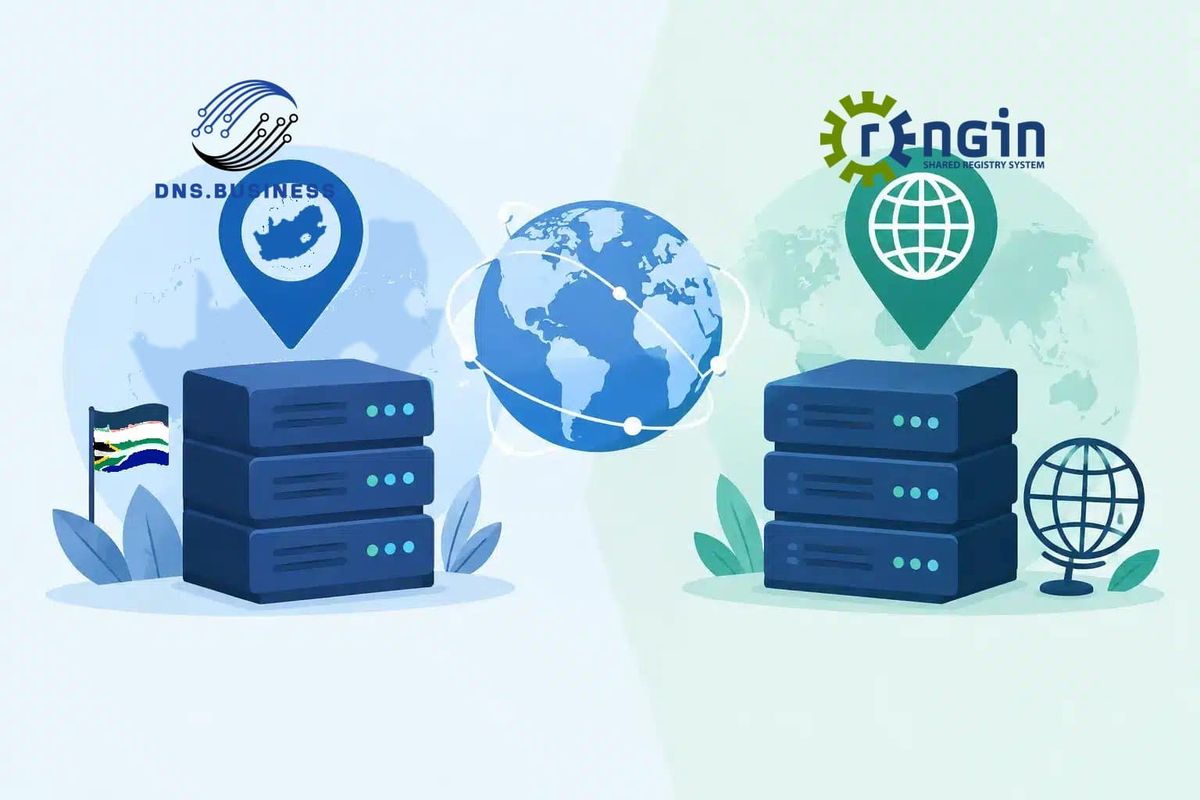
A registry backend is not simply a domain database with EPP attached. It is the operating foundation for policy enforcement, registrar connectivity, billing, reporting, DNS delegation, lifecycle management and the continuity of a namespace. Choosing between a ccTLD and a gTLD backend therefore starts with a more basic question: what obligations must the registry meet, and how quickly can they change?
Country-code and generic top-level domains share core technical requirements, but they work within very different governance, market and compliance environments. A platform that suits a commercially focused new gTLD may lack the policy controls, local integrations or sovereign operating model a national ccTLD expects. This article looks at those differences from the backend side. For governance and the day-to-day operating model, see our companion guide, ccTLD vs gTLD Operations: Running a Registry for Either Model.
The core difference
A ccTLD backend is shaped by the mandate of the country or territory it represents. Registry policy is often tied to local law, national digital strategy, language requirements, identity rules, tax treatment and domestic registrar accreditation.
A gTLD backend is built around a contract-driven global model. For ICANN-regulated gTLDs, the registry must support defined technical specifications, consensus policies, rights-protection mechanisms, registrar access requirements, data escrow and reporting. The difference lies in how policy becomes system behaviour: ccTLDs usually need deeper local flexibility, while gTLDs need predictable conformity with standardised global processes.
Policy flexibility is often the deciding factor
ccTLD policies vary widely. One registry permits direct registrations, another works only through accredited registrars. Some require local presence, local contacts, identity verification or eligibility documents. Others are open globally but keep special rules for geographic names, regulated sectors, reserved names or public-interest domains. The backend should make these rules operational rather than manual, through:
- configurable eligibility workflows and custom validation fields
- local contact models and approval queues
- fee exemptions and reserved-name controls
- localised notifications
A policy change should not become a redevelopment project. gTLDs need flexibility too, for premium names, launch programmes, registration restrictions and brand protections, but it has to sit alongside sunrise, claims, EPP extensions, registry reporting and consistent registrar transaction behaviour across a global channel.
Registrar channel design
The registrar model has direct consequences for backend architecture. A gTLD usually depends on a wide network of ICANN-accredited registrars, so its backend needs reliable EPP connectivity, predictable service levels, documented interfaces, secure credential management, rate controls and operational visibility for a high-volume channel.
A ccTLD often has a smaller, more local registrar base with different priorities: local payment methods, local invoicing requirements, registrar training, bilingual service and a mix of sophisticated and developing partners. The platform should support standard EPP while letting the registry configure accreditation rules, credit limits, pricing tiers, payment workflows, access permissions and partner reporting around its actual market.
Billing is more than an administrative function
Billing is often underestimated during backend selection. For many ccTLDs it is tied to local currency, withholding rules, VAT, local payment collection and registrar credit management. If the backend cannot handle these, staff fall back on spreadsheets and manual reconciliation, which adds operational risk.
For gTLDs, multi-currency models, premium and promotional pricing and high transaction volumes come to the fore. Rating logic has to be accurate across registrations, renewals, transfers, restores, add grace periods and premium renewals. In both models, billing must reconcile directly with domain lifecycle events and leave a clear audit trail.
Compliance is different, not optional
gTLD compliance is more standardised and externally visible: ICANN contractual obligations, data escrow, service-level measurement, reporting, rights-protection processes and operational testing. It belongs in platform design, monitoring, evidence collection, incident handling and release management, not in a document written after deployment.
ccTLD compliance is less uniform but no less demanding, covering national data protection, cybersecurity directives, telecommunications regulation, public procurement, financial reporting or government oversight. The operator should be able to control data retention, contact visibility, access roles, audit logs, consent fields, reporting exports and validation in line with local rules. Our article on what makes registry software compliant covers this in more depth.
Scale means more than domain volume
A registry with 50,000 names can still be mission-critical. A national namespace may face concentrated renewal periods, campaign-driven spikes, DNS-related events or sudden policy changes. A gTLD may grow from a small launch to millions of names. For gTLDs, scale centres on transaction throughput, geographic redundancy, registrar concurrency and automated provisioning. For ccTLDs, it can also mean a larger domestic registrar base or new language and policy capabilities. Either way, infrastructure should be designed for peak conditions, with redundant services, tested backups, DNS resilience, monitoring and recovery procedures that have been exercised, not just documented.
Migration needs registry-specific discipline
Migration can bring real gains, but it is one of the highest-risk events in registry operations. A migration plan must preserve far more than domain objects: registrar credentials, authorisation information, statuses, contacts, hosts, DNS delegation data, billing balances, policy exceptions, premium classifications, historical records and lifecycle dates. Data quality issues that a legacy system tolerated can become critical at cutover, which is why a registry data quality review is a sensible first step. Good practice runs from discovery and data mapping through staged testing, reconciliation, registrar onboarding and parallel checks to a governed cutover, with ICANN-facing requirements for gTLDs and local stakeholder communication for ccTLDs.
One engine, configured for each namespace
There is no universal winner. The right design depends on the registry’s mandate. The best platforms share a secure core and let the operator configure the policies, workflows and commercial rules that make each namespace distinct.
That is how rEngin is built. rEngin SRS is the core registry engine, the middle layer that brings together EPP interfaces, policy and transaction systems, ICANN gTLD and ccTLD compliance, RDDS through Whois and RDAP, and DNS and DNSSEC, running in high-availability production and OT&E environments. On top of it, rEngin Console is the operator control panel and rEngin Portal is the control panel for registrars and resellers. Portal version 3 is live at ZACR, RyCE, Gateway SRS and Registry Africa, with ZARC next.
rEngin SRS is in continuous development, with regular updates and improvements, and version numbers are published openly on the login pages. You can see both control panels in the rEngin Portal and Console walkthroughs.
See rEngin for your namespace
Whether you run a country-code or a generic TLD, the question is not whether a backend can manage domains, but whether it keeps you in control as policy, compliance, channels and growth evolve. Explore rEngin Console and rEngin Portal at renginsrs.com.